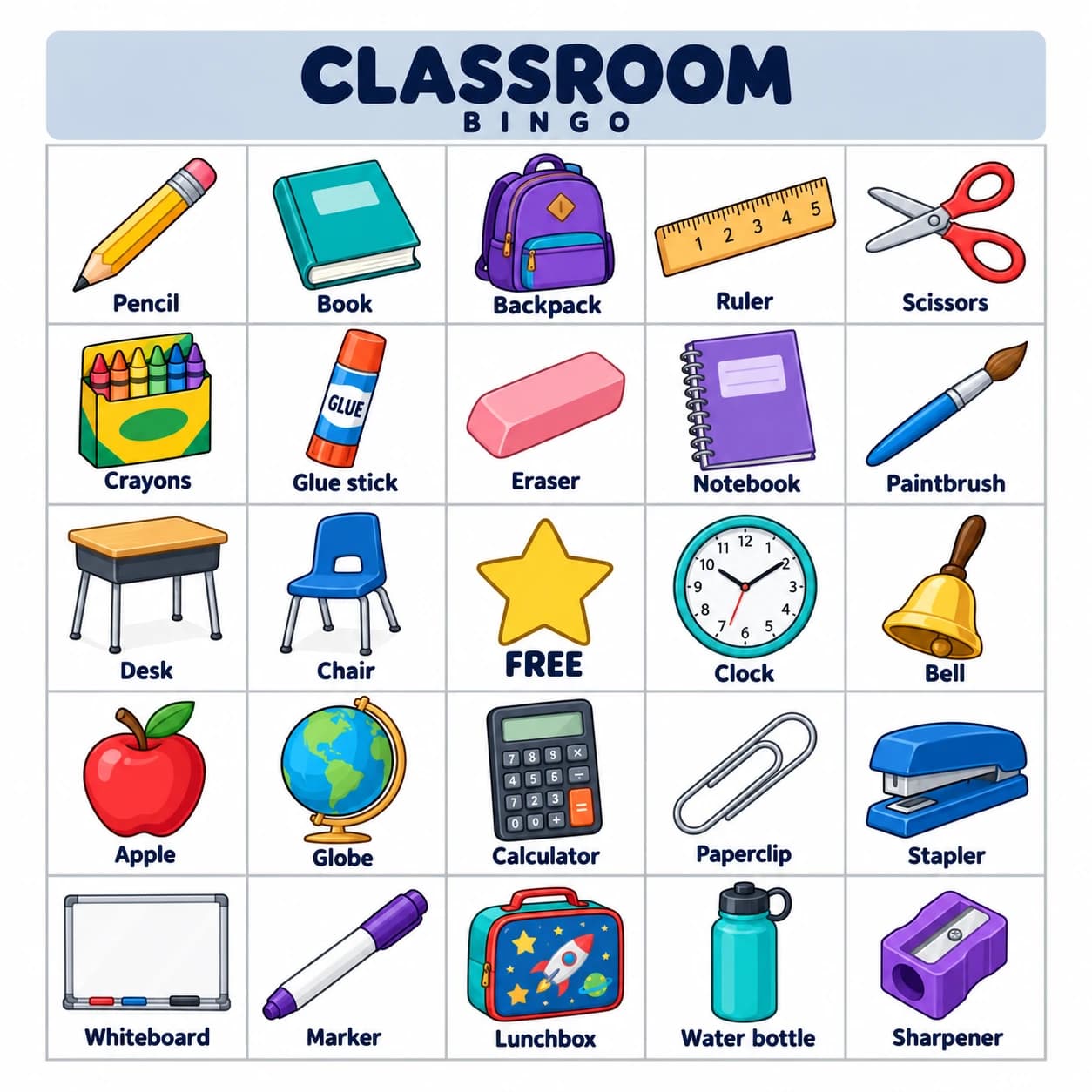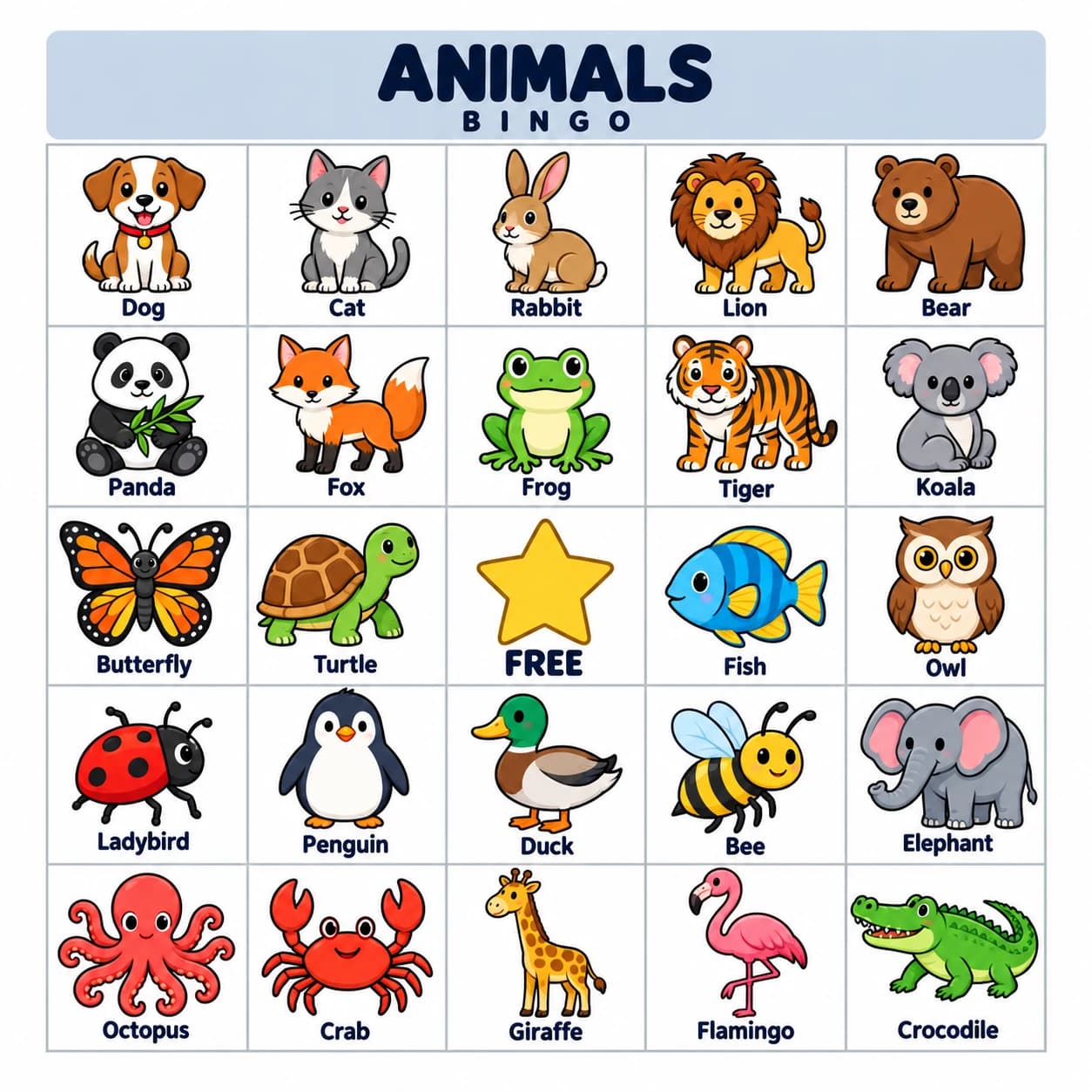
ESL vocabulary bingo is a call-and-match game: learners listen to a word or clue, find the matching picture or word, and cover that square. A single theme and a short, familiar word list make it easy to explain without lengthy instructions.
If you need a set immediately, start with the free ESL animals picture bingo pack. To use your own vocabulary, choose one of the lists below and edit it for your lesson.
Three beginner vocabulary lists
Each list contains eight items, enough for a 3×3 picture grid with a FREE centre. Use one list at a time. Introduce the words before playing rather than expecting learners to guess unfamiliar vocabulary during the game.
Animals
cat, dog, bird, fish, lion, elephant, monkey, rabbit
Caller prompts: start with “cat”. In a later round, use a clue such as “Find the cat” or “It has a long trunk” for elephant. Check that a clue has only one intended answer within your chosen set.
Food
apple, banana, bread, rice, egg, carrot, cheese, milk
Caller prompts: “Find the carrot” is easier than “A vegetable that is often orange”. Model both types before switching to clues. Avoid relying on colour alone if you plan to print in black and white.
Classroom objects
book, pen, pencil, ruler, bag, chair, desk, clock
Caller prompts: show a real object, say its name, or give a short clue. Make the pen and pencil illustrations easy to distinguish. Agree whether bag means a school bag before starting.
A suggested 15-minute lesson
- Minutes 1–3: introduce the set. Show each image or object and say its name. Invite learners to repeat or point.
- Minutes 4–5: demonstrate. Give out cards and counters. Call one word, mark a matching square, and show a winning line. Explain that not every card has to contain every item when using a larger vocabulary pool.
- Minutes 6–10: play. Call items in a shuffled order and tick them off on your caller sheet. Give learners time to look, listen and ask for a repeat.
- Minutes 11–12: check the winner. Ask the learner to name the items in the line while you check your call record.
- Minutes 13–15: use the language. In pairs, learners choose two items and make a sentence such as “I have a book” or “I like rice”.
Adapt bingo for adult ESL learners
Keep the same simple rules but choose relevant vocabulary: transport, groceries, workplace equipment or household objects. Use clear pictures and normal adult language. A beginner's language level does not imply a preference for children's themes.
For a household set, try: key, door, window, table, chair, bed, lamp and phone. Check whether your class uses “phone” or a more specific term, and keep the caller sheet consistent.
Move from recognition to speaking
Picture bingo mainly gives learners listening and recognition practice. Add a small speaking task rather than assuming that marking a square demonstrates fluent use. Ask “What is it?”, let a learner call a familiar word, or invite partners to use one word in a short sentence.
For reading practice, use printed word cards instead. See the guide to choosing a bingo format and the text bingo generator.
Make cards from your lesson vocabulary
Open the picture bingo builder, choose “Use my word list”, and enter one word per line. Review the list for free. Custom illustrated packs are paid; the ready-made ESL starter pack linked above is a separate free download.
Use 8–30 words for a 3×3 grid, 16–30 for 4×4, or 24–30 for 5×5. Larger lists give more vocabulary variety but may make a first lesson harder to follow. For early reading rather than vocabulary recognition, try CVC word bingo.
What if several learners win together?
Check each line against your called words and recognise every valid winner. Shuffled cards do not guarantee one winner per call. You can then clear the cards and start another short round with a different calling order.